
Collin County's Two Release Windows
Collin County publishes two useful but different recent-release views. The sheriff's inmate-information service says its linked lookup contains people still confined and people released during the past 24 hours. That is the best official starting point for a release today. Presence as a current inmate means the person is still held; a recent-release entry points to an exit event.
The second source is the sheriff's Arrests & Releases generator. It builds a downloadable Excel workbook for one through seven prior days. Choosing one day does not mean the 24 hours immediately before the click. It means yesterday, from midnight through 11:59:59 p.m. This completed-day file may trail a release processed after midnight today.
Check Collin County Releases Today
Begin with the person's full name and, when legitimately known, the SO or booking number. Common names demand a second identifier. The county court case can help distinguish two people with similar names, but the jail release entry remains the source for physical processing.
- Open the county inmate-information lookup and search the name. Read whether the entry is current or released within the prior 24 hours.
- Open the Arrests & Releases generator and set the slider to one prior day. Create and download the workbook.
- Use the Inmate Releases sheet. Match the name and SO number before relying on the row.
- Read the release date, time, and type. Separate a bond or sentence completion from a transfer or immigration handoff.
- When the event is missing or ambiguous, compare the court docket and request the maintained inmate record.
The report is built live and costs nothing to download. The county does not promise minute-by-minute synchronization, so an event may appear in one view before the other. A wider completed-day check is available through the 72-Hour Releases page.
Collin County Release Fields
The verified workbook has separate arrest and release sheets. Its release fields are more detailed than a simple name list, and they help explain the end of that jail episode. They do not by themselves resolve every later court or supervision question.
| Field | What it means |
|---|---|
| SO number and inmate name | Identifiers used to match the correct jail record. |
| Race | A descriptor in the county export, not a unique identifier. |
| Release date and time | When the facility recorded the exit processing. |
| Release type | The recorded reason, such as bond, time served, probation, or another disposition. |
| Offense description | The charge description tied to the reported episode. |
| Bond details | Bond type, amount, and bondsman name when applicable. |
The public workbook has no embedded booking photograph. A row also may not explain every hold or every legal effect. Court records show what the judge ordered, while the sheriff record supplies the physical release date and time.
Use the SO number when two names are similar or a spelling has changed. The offense description can help connect the row to the correct court case, but it is not a final judgment. Bond amount and bondsman fields apply only when the reported route involved bond. Blank cells should be left blank rather than filled through inference.
Read Collin County Release Types
“Release” is a broad report label. A personal recognizance bond, surety bond, or bond with conditions allows the person to leave the jail while the case continues. Served time means the custodial term recorded for that matter was completed. Probation points to court-ordered community supervision. None of these should be treated as a dismissal unless the court record says so.
- Bond
- Release from physical custody while a case remains active under stated conditions.
- Time served
- Completion of the jail time credited or ordered for the matter.
- Transfer
- Movement to another custodian rather than freedom from all custody.
- Discharge
- End of a custodial term or authority, which must be read in context.
A person can leave the Collin County Detention Facility for TDCJ, another jail, federal custody, or immigration custody. Search the receiving system before describing that event as a community release.
Where Collin County Releases Exit
The sheriff describes Admissions and Release as the main entrance and exit point at the Collin County Detention Facility. Property, bond, and release counters are nearby. The county does not publish a fixed release-hour schedule, a public exit-door map, or a family waiting rule. Court action, bond processing, unresolved holds, property work, and final checks can affect timing.
Do not turn the county's magistration deadlines into promised release times. Magistration is the initial judicial process after arrest. It is not the final jail exit. For direct confirmation, use the Detention Bureau information line at (972) 547-5100 and provide enough identity detail for staff to understand the question.
Note: A posted bond or court order can precede the jail's completed physical-release record.
Bond Releases Across Collin County
Collin County accepts bonds around the clock at the county facility and distinguishes cash, surety, personal, and pretrial release bonds. The researched pretrial-release fee is the greater of three percent or $20. A bond-out means the case continues. It does not erase the arrest or prove the charge was dismissed.
A person held at an Allen, Frisco, McKinney, Plano, or another city jail on a Collin County charge can sign the bond there and have it brought to the sheriff for processing. The physical exit may therefore occur at the city jail, while the county court maintains the lasting case. The arresting city remains the proper source for its police record.
This route explains why a person may not appear where expected. Confirm the actual holding agency, then use the county judicial record for the Collin County case.
Older Collin County Release Records
The public export ends at seven prior days, but that window is not a destruction rule. For an older episode, request the maintained booking and inmate record from Collin County Sheriff Open Records. Supply the full name, jailing date, SO number, case number, and requested fields when known. Precise details can avoid the posted records-search charge.
Ask for existing admission and release information, including date, time, authority, type, and destination if public. Texas public-records law does not require an office to create a new explanation. The county court docket can preserve the bond, disposition, sentence, dismissal, and later orders after the short jail display ends. It may not show the exact time the jail finished processing.
The sheriff's published fees distinguish a $5 records-search fee from charges for copies or a booking photograph. Supplying the jailing date and an identifier helps staff locate the existing episode and may avoid a broad search. A request should not ask the office to decide whether someone was “free”; it should seek the maintained release date, time, type, authority, and public destination fields.
VINE can add a custody-change alert for a participating agency. TDCJ serves a different population: people transferred to or confined in state prison. Its offender search is not an archive of people merely released from the Collin County jail. If a county row indicates transfer to TDCJ, the TDCJ number, SID, location, and projected date become the useful fields. A projected date remains prospective and is not proof that a later prison release occurred.
Collin County Report Controls
The official Arrests & Releases report generator displays the day-range control and defines the completed-day interval used for the workbook. The generated file contains an arrest sheet and a separate release sheet, so readers should open the correct tab before matching a person. Saving the workbook also preserves the selected recent range for later comparison with the court case or a records response.
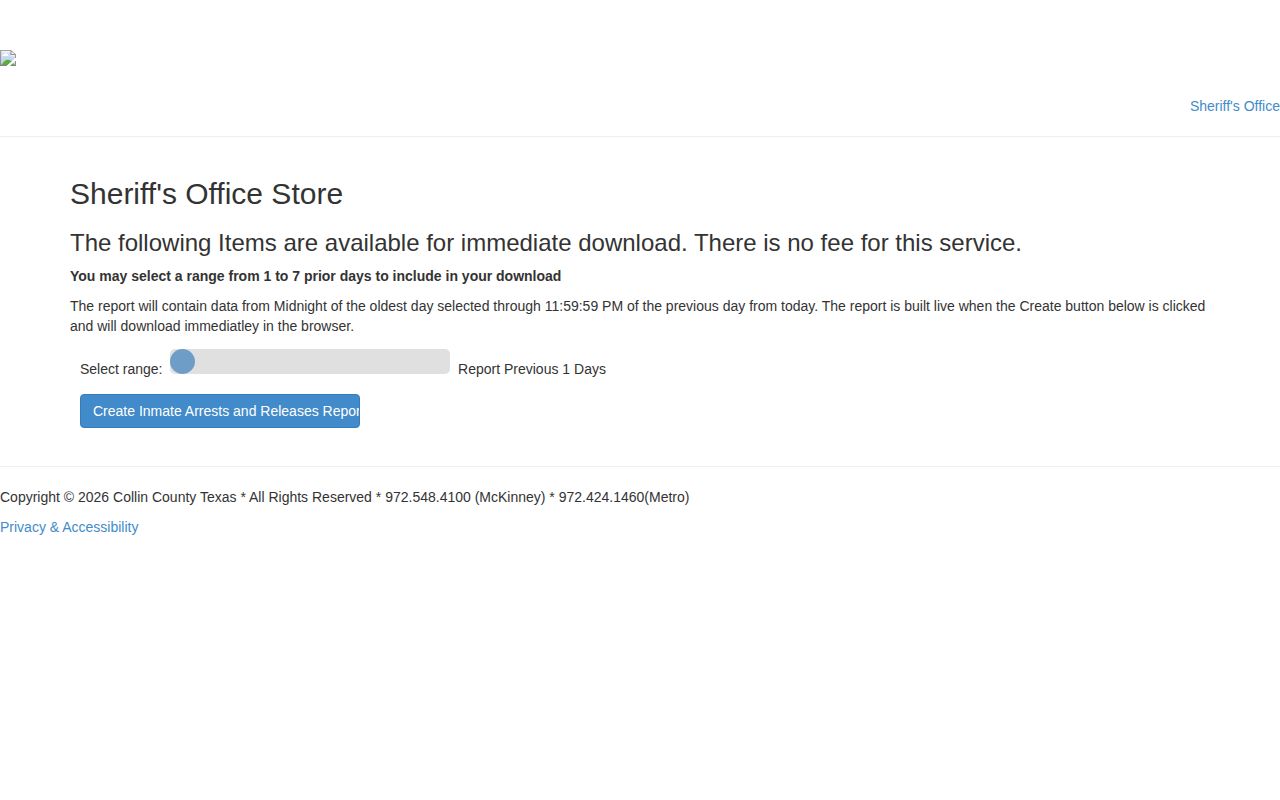
The screenshot helps confirm why one selected day means yesterday, while the rolling inmate lookup is the source for a release today. The dates displayed on the live control are more reliable than an informal assumption about when a 24-hour period begins. If a row appears later, compare the generated intervals rather than treating the earlier absence as a contradiction.
Public Record Search
Sponsored Results